
If you want SIL supports explained in detail, feel free to reach out to talk to our friendly team at Horizon Community Services.
1:1 1:2 and 1:3 SIL supports are terms you may hear during NDIS planning meetings, Supported Independent Living assessments or conversations with your support coordinator.
While these ratios can sound technical, they simply describe how support workers are allocated to participants within a Supported Independent Living environment.
Understanding these support ratios is important because they can influence the level of assistance a participant receives throughout the day, how support is delivered within a shared home, and how SIL funding may be structured within an NDIS plan.
At Horizon Community Services, we regularly help participants, families, carers and support coordinators understand different SIL support arrangements so they can make informed decisions about independent living.
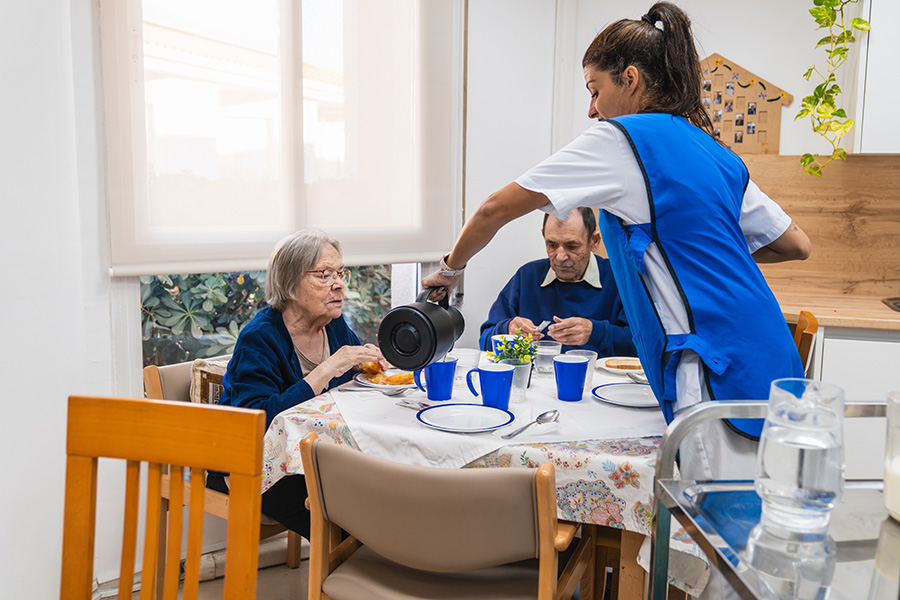
What do 1:1, 1:2 and 1:3 SIL supports mean?
1:1 1:2 and 1:3 SIL supports refer to the ratio between support workers and participants during a support period.
For example:
- 1:1 support means one support worker supports one participant.
- 1:2 support means one support worker supports two participants.
- 1:3 support means one support worker supports three participants.
The appropriate ratio depends on the participant’s individual support needs, daily routines, functional capacity, goals and approved NDIS supports.
It is important to remember that these ratios are not about giving someone “more” or “less” care in a general sense. They are about identifying the right level of support for the person, at the right time, in the right environment.
A participant may need 1:1 support for some tasks, shared support during other parts of the day, and more independent time when they are safe and confident to complete activities themselves.
SIL Supports Explained: SIL support ratios matter
SIL support ratios matter because they affect how daily supports are planned and delivered.
For participants, the right support ratio can help improve safety, confidence and quality of life. For families and carers, it provides reassurance that their loved one has the appropriate level of assistance. For support coordinators, understanding ratios helps with planning, evidence gathering and provider discussions.
The right support model should support independence, not create unnecessary dependence.
That means the goal is not always to provide the highest level of support. The goal is to provide suitable support that helps the participant live safely, build skills, participate in household routines and work towards their personal goals.
SIL Supports Explained: Understanding 1:1 SIL support
1:1 SIL support means one support worker is allocated to one participant for the period of support required.
This support ratio may be used when a participant needs close assistance, frequent prompting, direct support or supervision due to the impact of their disability.
In some cases, 1:1 support may be required across the day. In other cases, it may only be needed during specific activities such as personal care, community access, mealtimes, medication routines or behaviour support strategies.
Who may benefit from 1:1 SIL support?
A participant may benefit from 1:1 support if they require a higher level of assistance to manage daily life safely.
This may include people who:
- Require complex personal care
- Need frequent physical assistance
- Require close supervision for safety
- Have significant communication support needs
- Require behaviour support strategies
- Need assistance with most daily living tasks
- Require individualised support in the community
Every participant’s situation is unique. Support levels are generally informed by assessments, reports and evidence provided during the NDIS planning process.
Benefits of 1:1 support
When appropriate, 1:1 support can provide:
- Individual attention from a support worker
- Greater flexibility with daily routines
- Prompt assistance when support is required
- Personalised skill development
- Support that closely aligns with individual goals
- Increased safety during higher-risk activities
For some participants, 1:1 support may be an important part of maintaining wellbeing while still working towards greater independence.
SIL Supports Explained: Understanding 1:2 SIL support
1:2 SIL support means one support worker supports two participants during a support period.
This model is common in shared Supported Independent Living homes where participants have compatible routines, support needs and goals.
The support worker assists both participants while encouraging each person to participate in household routines, build confidence and develop independence.
Who may benefit from 1:2 SIL support?
A participant may suit 1:2 support if they need daily assistance but do not require constant one-on-one support throughout the entire day.
This may include people who:
- Can complete some activities independently
- Need prompting or supervision for daily routines
- Require help with meal preparation, cleaning or laundry
- Enjoy living with another person
- Benefit from shared routines and social interaction
- Are developing confidence in household tasks
1:2 support can be a positive option when participants are well matched and the support worker can safely meet each person’s needs.
Benefits of 1:2 support
Many participants enjoy 1:2 support because it can provide a balance between assistance and independence.
Benefits may include:
- Regular daily support
- Opportunities for shared routines
- Encouragement to build independence
- Social connection within the home
- Support to participate in activities together
- A more natural shared living environment
In a well-managed SIL home, shared support can help participants learn from each other, develop confidence and feel more connected.
SIL Supports Explained: Understanding 1:3 SIL support
1:3 SIL support means one support worker supports three participants during a support period.
This arrangement may be suitable in a shared living environment where participants have lower ongoing support needs, similar routines and the ability to safely share support.
In a 1:3 arrangement, the support worker helps participants manage daily routines while also encouraging independence and participation in household responsibilities.
Who may benefit from 1:3 SIL support?
A participant may suit 1:3 support if they are able to complete many daily tasks independently but still require regular prompting, supervision or assistance.
This may include people who:
- Can manage some personal routines independently
- Need reminders rather than hands-on support
- Can safely spend periods of time without direct assistance
- Enjoy being part of a shared household
- Have compatible routines with other participants
- Are focused on building practical life skills
1:3 support works best when participants are thoughtfully matched and the household has clear routines, strong communication and consistent support planning.
Benefits of 1:3 support
When suitable, 1:3 support may help participants experience:
- Greater independence
- Shared responsibility within the home
- Peer connection
- More opportunities to practise daily living skills
- Increased confidence
- A more community-focused household environment
This support model can be especially valuable when the participant’s goals include building independence, participating in social activities and becoming more confident in everyday life.
Can a participant have different SIL support ratios at different times?
Yes. A participant’s support needs may vary throughout the day.
For example, a person may require 1:1 support for morning personal care, shared support during household tasks, and less direct support during quiet evening routines.
Another participant may require individual support when attending appointments or community activities, but shared support at home when completing everyday tasks.
This is why SIL planning should always consider the person’s full routine rather than relying on a single label.
Good SIL support planning looks at when support is needed, what type of assistance is required, and how supports can be delivered in a way that promotes choice, dignity and independence.
SIL Supports Explained: How are SIL support ratios determined?
SIL support ratios are usually informed by evidence about the participant’s functional capacity, support needs and daily routines.
This may include:
- Functional Capacity Assessments
- Occupational Therapist reports
- Behaviour Support Plans
- Medical information
- Current support records
- Daily living assessments
- Support coordinator reports
- Participant goals and preferences
The NDIA considers the available evidence when deciding what supports are reasonable and necessary.
A SIL provider can help explain how supports may work in practice, but funding decisions are made through the NDIS planning process.
SIL Supports Explained: Can SIL support ratios change over time?
Yes. Support needs can change over time, and SIL support ratios may need to be reviewed as a participant’s circumstances change.
A participant may develop new skills and require less direct support in some areas. Another participant may experience changes in health, mobility, behaviour, communication or daily living capacity that require additional support.
Support ratios may be reviewed when:
- A participant is preparing for an NDIS plan review
- There has been a change in support needs
- Health or behaviour support needs have changed
- A participant is transitioning to a new home
- Current supports are no longer suitable
- A participant has achieved goals and is ready for more independence
Regular reviews are important because SIL should continue to reflect the participant’s current needs and goals.
SIL Supports Explained: Why participant matching matters
Shared SIL arrangements are most successful when participants are thoughtfully matched.
Compatibility is not only about support ratios. It also includes personality, routines, communication styles, interests, sensory needs, lifestyle preferences and community goals.
For example, one participant may enjoy a busy social household, while another may prefer a quieter environment. One person may enjoy group outings, while another may need more structured routines.
Good participant matching helps create a home that feels safe, respectful and comfortable for everyone living there.
At Horizon Community Services, we understand that successful Supported Independent Living depends on more than filling a vacancy. It requires careful planning, communication and a genuine understanding of each participant’s needs.
More than staffing ratios: what quality SIL should include
Support ratios are important, but they are only one part of quality Supported Independent Living.
A strong SIL provider should also focus on:
- Participant choice and control
- Safety and wellbeing
- Skill development
- Consistent and trained support workers
- Clear communication with families and support coordinators
- Regular goal reviews
- Meaningful community participation
- Culturally respectful and person-centred support
The quality of the support relationship matters just as much as the support ratio.
Participants should feel respected, heard and encouraged to grow at their own pace.
Community participation and quality of life
Supported Independent Living should help participants build a meaningful life, not just manage daily tasks.
Independent living is strengthened when participants are supported to connect with their community, build friendships, develop interests and participate in activities that bring joy and purpose.
Through Horizon Community Services and our connection with Access Logan Inc Community Enrichment Programs, participants can access creative, social and community-based opportunities that support confidence, wellbeing and connection.
Through Horizon Community Services and our connection with Access Logan Inc Community Enrichment Programs, participants can access creative, social and community-based opportunities that support confidence, wellbeing and connection.
Questions to ask your SIL provider about support ratios
Before choosing a SIL provider, it is helpful to ask clear questions about how support ratios are planned and delivered.
You may wish to ask:
- How do you determine whether 1:1, 1:2 or 1:3 support is suitable?
- Can support ratios change if the participant’s needs change?
- How do you match participants in shared homes?
- What happens if one participant requires more support than expected?
- How are support workers trained?
- How do you encourage independence?
- How often are participant goals reviewed?
- How do you communicate with families and support coordinators?
- What community participation opportunities are available?
The answers can help you understand whether the provider is focused on quality outcomes, not just staffing numbers.
Why choose Horizon Community Services for SIL support?
At Horizon Community Services, we provide personalised Supported Independent Living supports that are designed around the participant, not just the roster.
Our team works closely with participants, families, carers, support coordinators and allied health professionals to understand each person’s support needs, routines, communication preferences and long-term goals.
We are committed to helping participants build independence, feel safe at home and stay connected to their community.
Horizon Community Services proudly supports participants across:
- Brisbane
- Logan
- Ipswich
- Gold Coast
- Sunshine Coast
Learn more about our Supported Independent Living services, explore more helpful resources on the Horizon Community Services blog, or find us on Google Maps.
Find the right SIL support ratio for your needs
Choosing between 1:1 1:2 and 1:3 SIL supports is not about selecting the highest level of care. It is about identifying the right support model for the participant’s needs, goals, safety and independence.
For some participants, individual 1:1 support is essential. For others, shared 1:2 or 1:3 supports can offer the right balance of assistance, independence and social connection.
If you are unsure which support ratio may be appropriate, Horizon Community Services can help you understand the options and prepare for informed conversations with your support network.
Speak with Horizon Community Services about SIL
Horizon Community Services
Unit 3, 13 Corporate Place
Hillcrest QLD 4118
Phone: 07 3520 8909
Email: hello@horizoncommunityservices.au
Supporting participants throughout Brisbane, Logan, Ipswich, the Gold Coast and the Sunshine Coast.